Find wall insulation contractors near you
Browse SEAI-registered installers across all 26 counties. Every contractor is approved under the Better Energy Homes scheme.
Wall insulation contractors Ireland: find a registered installer near you
Every contractor in this directory is registered with SEAI under the Better Energy Homes scheme and approved to carry out cavity wall insulation, external wall insulation (EWI) and internal dry-lining on Irish homes.
Poorly insulated walls account for up to 35% of heat loss in an average Irish home. Whether your house is a 1970s semi-detached with an unfilled cavity, a Victorian terrace with solid stone walls, or a bungalow that needs external cladding, there is a registered contractor in your county who can carry out the work and submit the SEAI grant on your behalf.
Not sure which type of insulation you need? Use the cavity vs external wall insulation guide to find out before you call anyone.
Wall insulation contractors in Leinster
12 countiesWall insulation contractors in Munster
6 countiesWall insulation contractors in Connacht
5 countiesWall insulation contractors in Ulster (ROI)
3 counties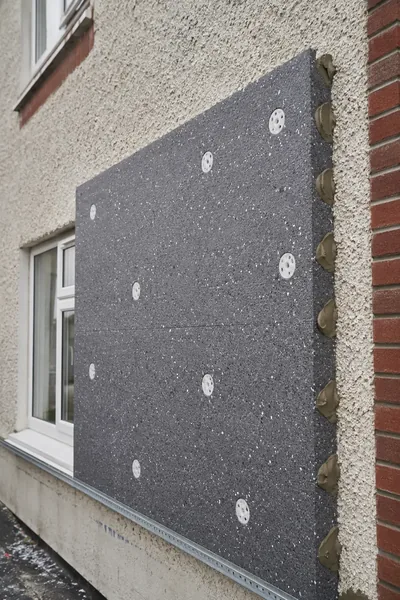
External wall insulation
What is external wall insulation and is it right for your home?
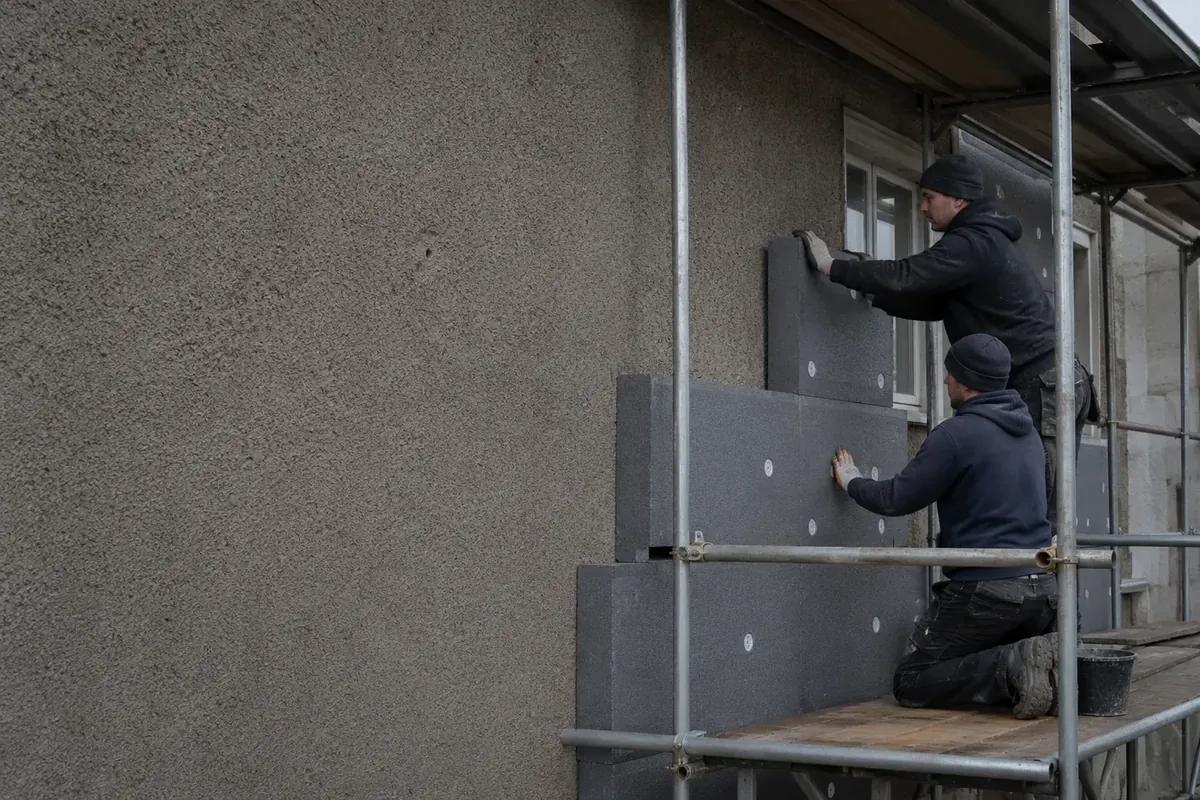
External wall insulation (EWI) is a system in which an insulating board, typically expanded polystyrene (EPS) or mineral wool, is fixed directly to the outside face of your walls. Once the boards are in place they are covered with reinforcing mesh and finished in render, brick slips or cladding. The result is a fully insulated, weatherproofed outer envelope.
Unlike cavity wall insulation, EWI can be fitted to almost any wall type: solid stone, solid brick, hollow block, and existing cavities that have already been filled. This makes it the go-to solution for older Irish homes built before the 1940s. Many homeowners combine EWI with a heat pump as part of a full retrofit — heat pump installation requires a RECI-registered electrician. If your project also involves structural roofing repairs before cladding, roofersinireland.ie lists registered roofers across all 26 counties.
- Works on solid walls where no cavity exists
- Brings U-value down to 0.27 W/m²K or lower
- No disruption inside the home during installation
- Typically 5 to 10 days for a semi-detached house
- Planning exempt for most standard residential properties
SEAI Better Energy Homes 2026
SEAI grants for wall insulation
All contractors in this directory are registered under the SEAI Better Energy Homes scheme. They handle the SEAI grant application on your behalf so the grant is deducted directly from your invoice. You pay only the balance.
- No income test: open to all eligible homeowners
- Houses built and occupied before 2011 are eligible
- Grant applied at invoice stage, no upfront payment required
- Combine cavity wall and attic grants for up to €3,200 total
- Combine EWI and attic grants for up to €11,000 total
Everything you need to know
Wall insulation in Ireland: the full picture
EWI costs in Ireland
A semi-detached house typically costs €12,000 to €22,000 before the €8,000 grant. Cost drivers include wall area, board thickness, render spec, and access. Get at least three quotes and use our cost guide to benchmark them.
See 2026 cost guideEWI finishes and renders
The most common finish in Ireland is silicone thin-coat render, low maintenance and available in many colours. Brick slips are popular for terraced homes. Timber cladding is used on contemporary builds. Your contractor advises what suits your wall type and local context.
EWI guideEWI vs cavity wall insulation
Post-1940s homes with a dry, clear cavity suit cavity wall insulation. Older solid-wall homes need EWI or dry-lining. EWI can also be applied over a poorly performing existing cavity. Our comparison guide explains which option suits your home.
Compare optionsPlanning permission for EWI
Most EWI installations are exempt development under Irish planning regulations. Exceptions apply to protected structures and Architectural Conservation Areas. Your registered contractor will confirm whether your property needs a planning consultation before work begins.
EWI guideHow to choose a contractor
Always verify SEAI registration before agreeing any work. Ask for references, a written system specification, and an Agrément Certificate for the EWI product. Get at least three quotes on identical scope: same board thickness, same render, same reveal treatment.
Grant application guideProtected structures and ACAs
Standard EWI systems require planning consent on protected structures. Internal dry-lining is often preferred, or a specialist breathable EWI using lime render may be approved. Contact your local authority planning department before proceeding on any listed property.
Dry-lining guideFrequently asked questions
What is the best type of wall insulation for an Irish home?
The best type depends on how your home was built. Post-1940s homes with a cavity suit cavity wall insulation. Older solid-wall homes need EWI or dry-lining. EWI delivers the highest thermal performance and the largest SEAI grant.
Do I need a registered contractor to get the SEAI grant?
Yes. Only a contractor registered with SEAI under the Better Energy Homes scheme can submit the grant on your behalf. Using an unregistered contractor means no grant is available regardless of the work done.
How do I know if my house has cavity or solid walls?
Measure the wall thickness at a window reveal. Under 260mm usually means solid wall; 260mm or more usually means cavity. Pre-1940 homes are typically solid; post-1945 homes are usually cavity. A registered contractor can confirm with a free survey.
How much does wall insulation cost in Ireland?
Cavity wall for a semi-d typically costs €1,200 to €2,000 before the €1,700 grant. EWI ranges from €12,000 to €22,000 before the €8,000 grant. See our 2026 cost guide for a full breakdown.
How long does wall insulation take to install?
Cavity wall insulation is typically completed in a single day. EWI on a semi-detached house usually takes 5 to 10 working days including scaffolding, boarding, mesh, basecoat and final render. Internal dry-lining is done room by room over several days to weeks.
Can I get insulation done on a protected structure?
Yes, but it requires additional steps. Standard EWI usually needs planning consent on protected structures. Internal dry-lining is often preferred, or a specialist breathable EWI with lime render. Contact your local authority before proceeding.
What is external wall insulation and how does it work?
EWI is insulation boards fixed to the outside face of your walls, covered with reinforcing mesh and finished in render or cladding. It wraps the building in a continuous insulating layer, eliminating cold bridges. It works on any wall type and qualifies for the full €8,000 SEAI grant.
How do I find wall insulation companies near me?
Use the county directory above. Select your county to see all SEAI-registered installers with contact details. Get at least three written quotes and confirm SEAI registration before committing to any contractor.
Not sure which insulation you need?
Read our guides on cavity wall, external wall and dry-lining, and check your SEAI grant before you call a contractor.